


For employment verifications please contact: [email protected]


 7.28.2026
 10 min read
SR 26-02 represents a fundamental shift in model risk management. This white paper explores how financial institutions can move beyond prescriptive compliance to build defensible, judgment-based governance frameworks for models, AI, and third-party solutions.
Why model risk management is moving from rules to judgment and what $30B+ banks must do now.
The 2026 interagency guidance does not change the discipline of model risk management it changes where that discipline lives. Under SR 11-7, rigor was embedded in rules. Under SR 26-02, rigor must be demonstrated through judgment.
The shift that matters most is not in the guidance, it is inside the bank.
After fifteen years, SR 11-7 is gone. On April 17, 2026, the Federal Reserve, OCC, and FDIC jointly issued revised model risk management guidance, published as SR 26-2, OCC Bulletin 2026-13, and FDIC FIL-15-2026. It replaces SR 11-7, OCC Bulletin 2011-12, the BSA/AML model statement (SR 21-8 / FIL-27-2021), and the FDIC’s 2017 adoption (FIL-22-2017). One framework, three agencies, one rulebook for the first time.
The temptation is to read this as a relaxation. The guidance is shorter. It is explicitly non-binding. It walks back to the annual revalidation cycle. The model definition has tightened. Most banks will see their inventories shrink.
That reading misses the point. The discipline hasn’t gone away. It’s been transferred. SR 11-7 told institutions what to do. SR 26-2 asks them to defend what they choose to do, on its own terms. That is a hard question to answer ,and the institutions that mistake it for an easier one will be exposed at the next examination.
Five shifts below define the new methodology. They are interlinked, operating one without the others doesn’t work.
1. Materiality replaces uniform validation.
SR 26-2 formalizes a two-dimensional materiality construct:
a. Model exposure (the financial magnitude of decisions a model drives) and
b. Model purpose (the regulatory or strategic weight of the use case).
Together they determine how much rigor a model gets. High-materiality models like BSA/AML transaction monitoring, keep or deepen the rigor SR 11-7 applied. Low-materiality models can move to lightweight monitoring with escalation triggers if conditions change.
Implication: Banks must build defensible materiality frameworks, not apply uniform controls.
2. Effective challenge over structural independence.
SR 11-7 was widely read to require organizational separation between developers and validators. SR 26-2 explicitly decouples validation quality from where the validator sits in the org chart. Accuracy, expertise, and authority to drive change matter. Reporting lines don’t.
Implication: Banks must strengthen challenge capabilities, not just reporting lines.
3. Risk-based cadence over annual revalidation.
The de facto annual review cycle is gone. Cadence is now driven by materiality, change velocity, and data availability. Stable, low-materiality models may need infrequent touch. High-materiality models in volatile environments may need more than annual.
Implication: Banks must operationalize dynamic lifecycle monitoring.
4. Aggregate risk over model-by-model review.
The guidance introduces an explicit expectation to assess risk at the portfolio level shared data pipelines, common assumptions, cascading dependencies. An AML customer risk segmentation model feeding multiple transaction monitoring scenarios, customer risk rating methodologies, and alert prioritization processes is now considered a critical governance object, requiring independent oversight and validation.
Implication: Banks must understand interconnected model risk, not just individual models.
5. Increased Focus over Vendor and Third-Party Models.
Financial institutions increasingly rely on vendor-provided solutions for transaction monitoring, sanctions screening, and fraud detection. Under SR 26-02, regulators emphasize that institutions remain fully accountable for understanding model limitations, assessing implementation risks, and independently challenging vendor methodologies where appropriate. The guidance also reinforces the need for stronger governance over third-party dependencies, particularly within AML and financial crime systems. Institutions are therefore expected to validate not only the vendor model itself, but also how the solution is configured, tuned, and operationally used within the organization.
Implication: Banks must validate not just models, but implementation, configuration, and use.
Revised Model definition
The model definition tightened. To qualify, an artifact must apply all three:
Implication: Inventories will shrink, but scrutiny per model will increase.
Explicit exclusions
Organizations are expected to reassess their existing model inventories, with many lower-risk models likely being downgraded in criticality, while some models related to regulatory reporting and AML/BSA functions may receive higher risk classifications under the updated unified governance framework.
Implication: The focus shifts from volume of models to impact decisions.
The guidance also carves out generative AI and agentic AI entirely, calling them “novel and rapidly evolving.” This is not a free pass. The agencies explicitly direct institutions to govern these systems under their broader enterprise risk frameworks. When an agentic system invokes a traditional model, that underlying model remains fully in scope.
For most banks, the carve-out expands the governance problem, it shifts responsibility onto enterprise frameworks that don’t yet exist.
Implication: This expands, rather than reduces, the risk of challenge—forcing banks to govern AI through enterprise frameworks that are still maturing.
Three consequences flow from this shift:
1. Validators must articulate, not just perform. The technical work hasn’t changed. The requirement to explain why this approach was right for this model has gone up significantly.
2. Materiality becomes a risk decision. Designating a model “immaterial” is a judgment that will be examined if the model later contributes to a loss or finding. It needs to be documented, sourced, and defensible.
3. Audit evaluates effectiveness, not activity. Audit is asked to evaluate whether the MRM program is rigorous and effective overall – not to re-perform validation work.
The checklist is gone. The discipline is not. The institutions that move fastest are the ones that already know why every control in their program exists.
To operationalize SR 26-02, banks must execute three priorities: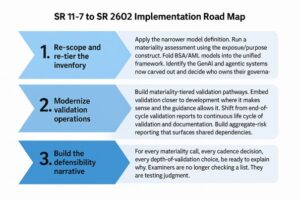
While SR 26-02 formally applies across institutions, its impact is most significant for banks with over $30B in assets, where model complexity, regulatory scrutiny, and organizational scale demand a structured response.
However, smaller institutions with advanced model usage, fintech partnerships, or BaaS models should expect similar supervisory expectations.
This is not about size alone; it is about model dependency.
SR 26-02 is not just a regulatory change; it is a strategic inflection point.
It replaces prescriptive controls with judgment-based governance. It shifts validation from a periodic function to a continuous capability. And it elevates defensibility from documentation to a core institutional asset.
Most banks will respond by updating policies. The institutions that lead will redesign how model risk is understood, executed, and governed.
The rulebook has been simplified. Execution has not been.
Where most institutions struggle is not in understanding the guidance, it is in operationalizing judgment at scale. Matrix‑USA Advisory focuses on closing that gap.
Re-scope and Re-tier the Inventory
Banks often underestimate the complexity of applying the new model definition and materiality construct. Matrix-USA brings structured methodologies to reclassify models, quantify exposure, and rationalize inventories, while establishing governance for AI and third-party dependencies.
Impact: A streamlined, risk-aligned inventory with clear ownership and prioritization.
Modernize Validation Operations
Many institutions attempt to layer SR 26-02 onto legacy validation models, resulting in inefficiency and inconsistency. Matrix‑USA redesigns validation as a lifecycle capability, embedding risk-based pathways, integrating validation with development, and enabling portfolio-level risk visibility.
Impact: Faster, more efficient validation cycles with stronger risk insights and scalability.
Build the Defensibility Narrative
The hardest shift is from performing validation to defending decisions. Matrix‑USA helps institutions institutionalize judgment, through decision frameworks, documentation standards, and traceable governance that withstands regulatory scrutiny.
Impact: A credible, outcome-focused narrative that stands up to regulatory scrutiny.
Matrix does not treat SR 26-02 as a compliance exercise, but as an operating model transformation. Our approach integrates:
Outcome: A scalable, outcome-focused model risk framework aligned with how SR 26-02 is applied in practice, not just how it is written.
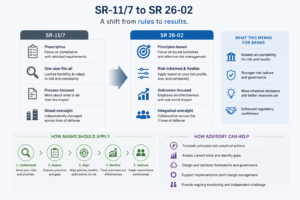
Bottom Line: SR 26-02 raises the bar for judgment, consistency, and defensibility. Matrix‑USA helps banks meet that bar, by embedding it into how they operate, not just how they comply.
References:
Federal Reserve. Supervisory Letter SR 26-2, Revised Guidance on Model Risk Management Guidance, April 17, 2026.
OCC Bulletin 2026-13, Model Risk Management: Revised Guidance, April 17,2026.
FDIC FIL-15-2026; Agencies Revise the Interagency Model Risk Management Guidance, April 17, 2026.
Interagency Supervisory Guidance on Model Risk Management), April 17, 2026.


The Paradox of Abundance: The Principle of Fraud Intelligence
The Paradox of Abundance: The Principle of Fraud Intelligence

How New Technology Is Reshaping AML Typologies and Red Flags
How New Technology Is Reshaping AML Typologies and Red Flags
A Framework for Governance, Evidence and Regulatory Confidence
Learn how financial institutions can transform regulatory remediation from a compliance exercise into an enterprise capability that strengthens governance, accelerates execution, and lays the foundation for responsible AI adoption.
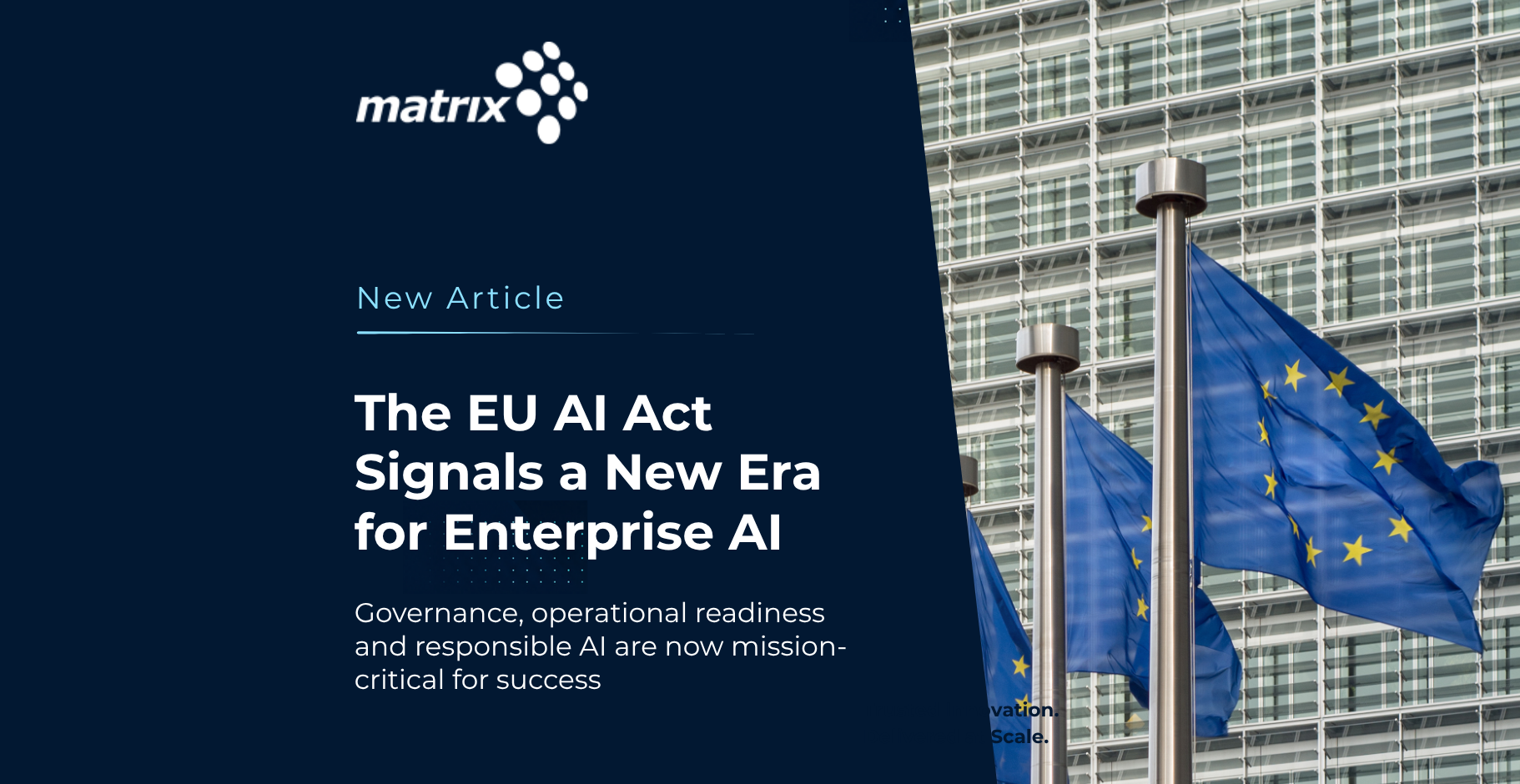
The EU AI Act Signals a New Era for Enterprise AI
The EU AI Act is more than a compliance regulation. It marks a shift toward governed, production-ready AI and enterprise accountability at scale.
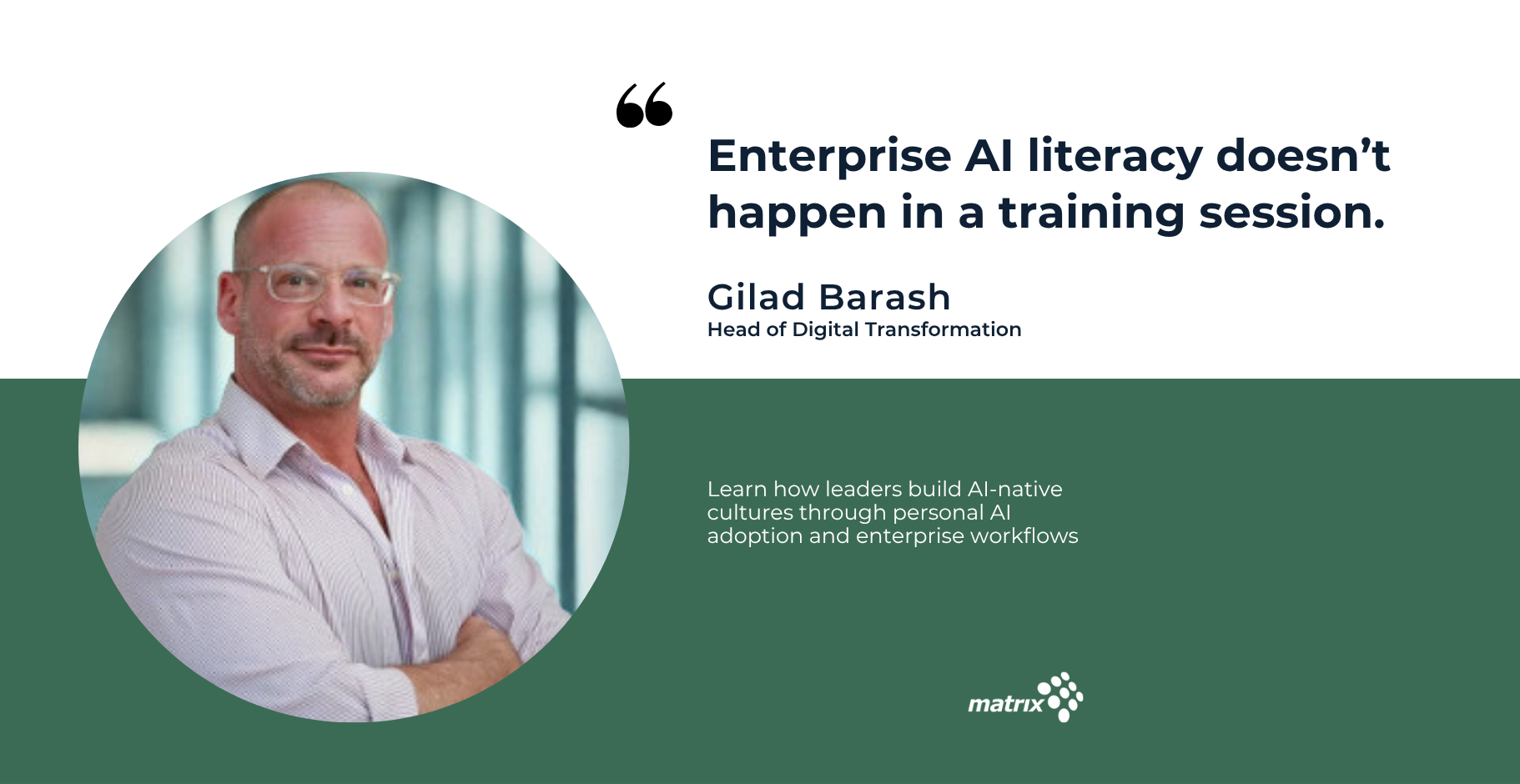
Enterprise AI Literacy Requires More Than Training
Enterprise AI literacy develops through two parallel shifts: personal AI productivity tools and operational AI workflows. Organizations that scale AI successfully build both simultaneously.
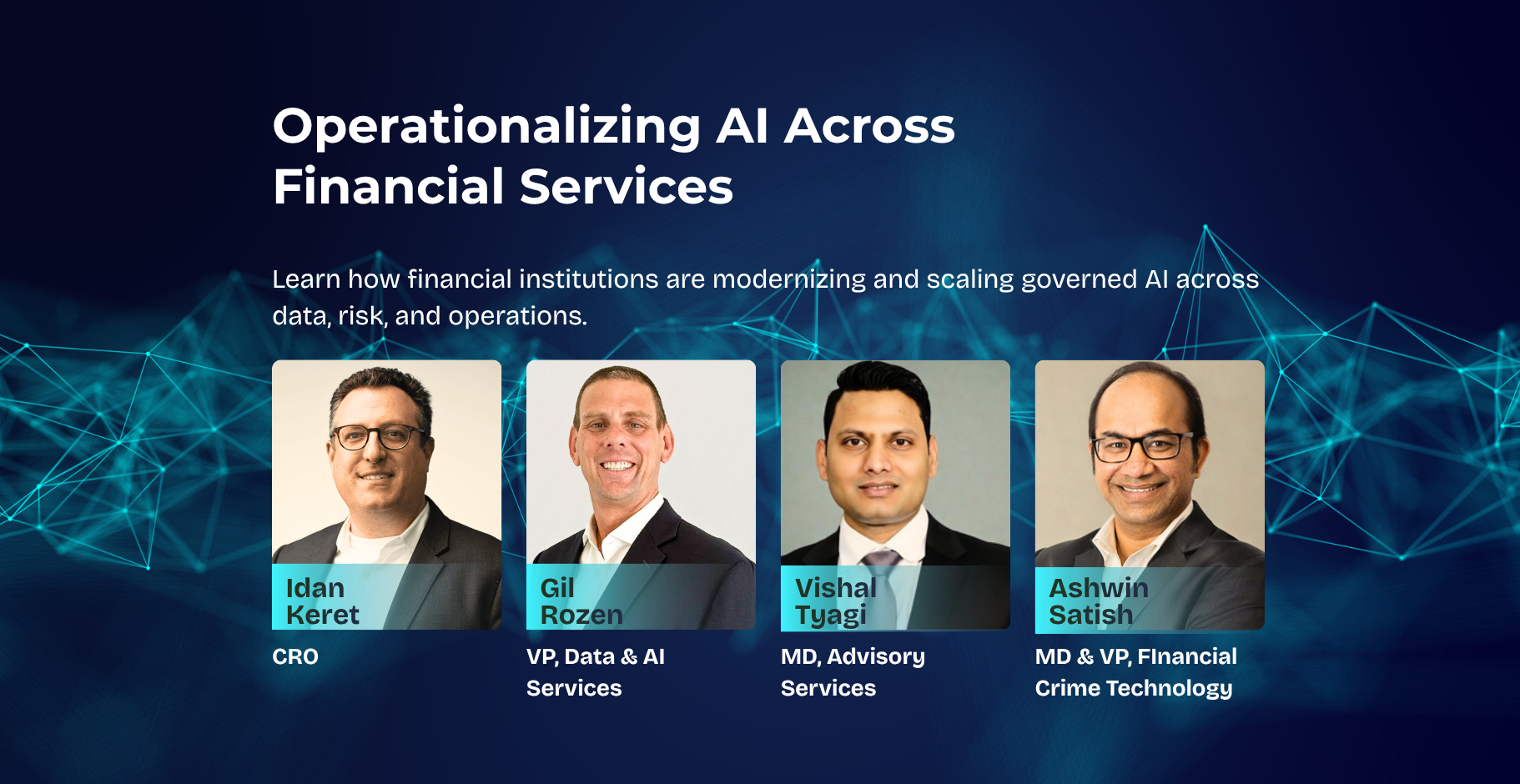
AI in Financial Services Is Moving Beyond Pilots
Financial institutions are entering a new phase of AI adoption where modernization, governance, and operational readiness determine success at enterprise scale.
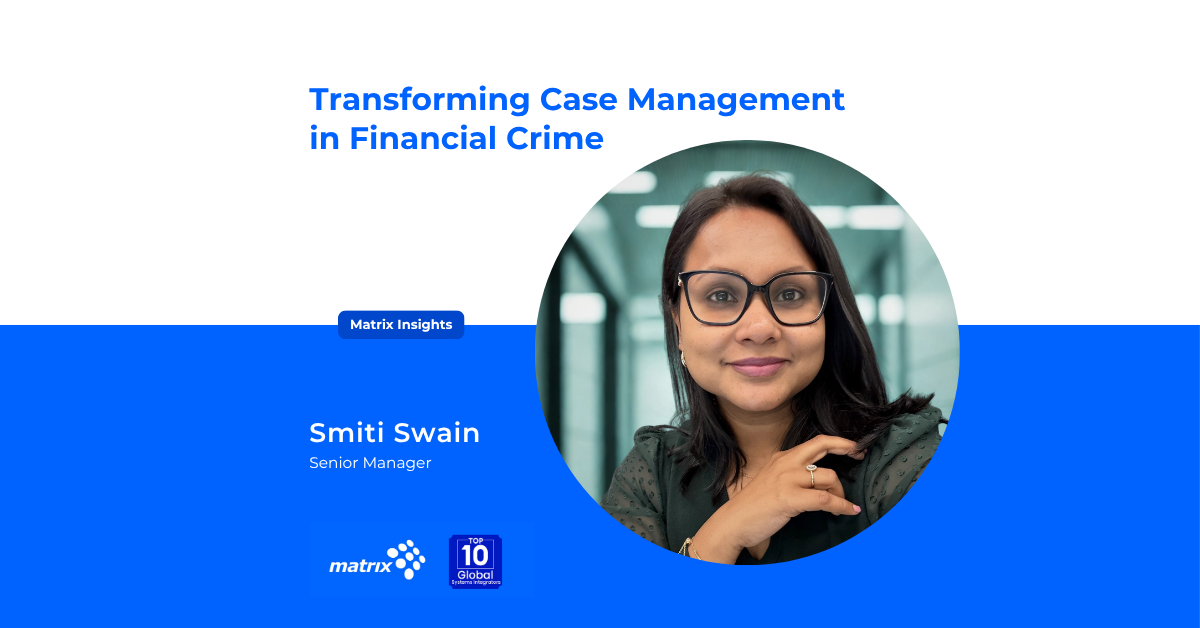
Case Management as a Financial Crime Ecosystem
How modern case management connects AML, sanctions, and investigations into a unified risk management framework.
Building Scalable Transaction Monitoring with Actimize SAM
Explore how financial institutions use Actimize SAM to build scalable transaction monitoring programs through smart architecture, behavioral profiling, and flexible detection rules.
Enterprise AI Deployment Strategy That Works
Many CIOs regret early AI decisions. Learn how enterprises can deploy AI strategically to reduce risk, control costs, and deliver real business outcomes.
Treating Data as a Strategic Asset
Leaders often assume their biggest data challenge is technology. In reality, misalignment across systems and definitions creates a decision-confidence problem. Learn why treating data as a strategic asset starts with alignment.
Navigating Bank M&A Integration
How banks can align technology, risk, and data to successfully integrate after mergers.
Matrix Expands Dataiku AI Collaboration to the Americas
Matrix announced the expansion of its collaboration with Dataiku across North and Latin America, enabling financial institutions to modernize fragmented analytics and deploy AI-driven fraud, compliance, and risk solutions in weeks instead of months.

AI Transformation for AML & Fraud Modernization
Transform financial crime operations with AI-driven AML and fraud modernization, enhancing detection, reducing false positives, and enabling real-time, compliant decision-making at enterprise scale.
Matrix USA Launches Global Data Services Practice to Accelerate Enterprise AI Adoption
Matrix USA announces Matrix Data Services, a global practice unifying data, AI, and digital transformation expertise to help enterprises scale AI responsibly.
Matrix USA Completes Magic Software Merger
The combined organization now ranks among the top 10 publicly listed IT services firms in the U.S. and Europe, expanding global scale and enterprise capabilities.

Why AML Programs Struggle to Scale
Explore why AML programs fail to scale — and how data, tech, and operational fixes can future-proof your compliance approach.

ThetaRay & Matrix USA Launch AI Overlay for AML Modernization
New partnership helps banks and fintechs enhance legacy transaction monitoring with AI-driven detection, faster investigations, and a regulator-aligned path to 2026 readiness.

Smarter Construction Starts with Data
Construction is one of the hardest industries to run well. Margins are tight. Decisions are constant. Complexity is high. Yet many construction teams are sitting on more data than ever and getting…
Natural Language Query: From Data to Decisions
How NLQ uses modern AI to translate business questions into trusted answers—and what enterprises need to make it work at scale.
Why AML Teams Lose Time and Trust
Poor data quality slows investigations, increases false positives, and erodes trust across AML programs.
Feedzai and Matrix USA Launch Global Partnership to Modernize Financial-Crime Prevention
Feedzai and Matrix USA partner to help financial institutions modernize fraud and AML defenses with AI-native technology and proven delivery.
Adoption Is the Only Metric That Counts
Explore why AI projects fail without adoption, how value is defined for users, real‑world examples from enterprise AI pilots, and actionable principles to design AI solutions that people actually use. This guide focuses on driving adoption as the core success metric for AI at Matrix USA.

The Unseen Work Behind AI
AI won’t fix messy data, it amplifies it. Data governance creates the consistent foundation AI needs to deliver results.

Modernizing AI and Risk Modeling Review Process | AI Model Risk Management
Expert perspectives from the ACAMS New York Chapter panel on AI model risk management and agentic AI governance in financial services.

Performance Tuning Best Practices for DataMigration / Ingestion Workloads in AWSRedshift
With the right MPP usage, schema design, and ELT workflows can speed up data migration and transformation that cut load times by 70%.

Reduce Merchant Fraud Exposure During the Holiday Surge
Learn how banks and payment providers can use AI, merchant-level intelligence, and unified detection to reduce rising fraud and regulatory pressure during holiday shopping seasons.
25 Years Fighting Financial Crime — And This Report Still Stopped Me in My Tracks
After two and a half decades in this field, very little truly surprises me anymore. But reading the 2025 Global Organized Crime Index was a clear reminder of how fast the landscape is shifting — and how high the stakes have become.
Seeing Isn’t Believing: How Deepfakes Are Changing the Fraud Landscape
This age-old saying has taken on a new and alarming meaning in the deepfake era. As trust in digital media erodes, business and compliance leaders face a rapidly growing threat.

Geopolitics, Financial Crime, and the AI Revolution: The New Battlefield for Financial Services
The intersection of geopolitics, large scale economic crime, and artificial intelligence (AI) is rapidly reshaping the global financial services landscape.

Navigating the AI Frontier: A Strategic Approach to AI Governance and Compliance Strategy in Financial Institutions
The rapid evolution of Artificial Intelligence (AI) presents unprecedented opportunities for innovation and efficiency across industries, particularly in financial services. However,

Future-Proofing Financial Crime Compliance: A Technology Blueprint for Smarter Risk Management
The evolution of threats to the financial system is outpacing advancements in Financial Crime Compliance (FCC) regulations and technology used by financial institutions (FI). In this situation, FI can save considerable funds, by creating or evolving their business architecture with a view of adapting to emerging threats and the advanced tech that will be required to tackle them.

Extending AML Regulations to Investment Advisors
On August 28, 2024, the Financial Crimes Enforcement Network (FinCEN) issued a final rule that extends Anti-Money Laundering (AML) and Countering the Financing of Terrorism (CFT) requirements to Registered Investment Advisers (RIAs) and Exempt Reporting Advisers (ERAs). This rule, effective January 1, 2026, mandates that RIAs and ERAs develop and implement comprehensive AML/CFT programs, aligning them with other financial institutions under the Bank Secrecy Act (BSA).

2024 Year in Review: Financial Crime Compliance, and Regulatory Trends
In 2024, regulatory enforcement increased, financial crime risks evolved, and scrutiny of both traditional and emerging financial institutions heightened. As regulatory bodies worldwide intensify their focus, organizations must adapt to a rapidly changing compliance landscape.

Databricks 2024 Developments and Announcements
The global Databricks Data + AI conference held two weeks ago in San Francisco included a long list of innovations and announcements. Unlike last year, this year Snowflake and Databricks held their conferences in the same conference hall (Snowflake first and Databricks a week later), giving data professionals and enthusiasts the opportunity to catch up, learn and attend an action-packed couple of weeks of announcements, expert presentations and networking..

FINTRAC’s requirements – Armored cars
The Financial Transactions and Reports Analysis Centre of Canada (FINTRAC) is Canada’s financial intelligence unit and anti-money laundering and anti-terrorist financing supervisor. Its mandate is to facilitate the detection, prevention and deterrence of money laundering and the financing of terrorist activities, while ensuring the protection of personal information under its control.
Using Generative AI in Combating Financial Crimes
Amazon recently launched a feature where hundreds, and sometimes thousands, of reviews are summarized into a concise and simple paragraph. This auto-generated summary allows the customer to instantly get an overall review of a product’s capabilities as well as overall customer satisfaction. This is a great example of using Large Language Models (LLM) to process and produce text that resembles that of humans. These models can understand language structures, grammar, context, and semantic linkages since they have been trained on enormous amounts of text data.

Evolution of DeFi Amid Regulatory Uncertainty
Emerging technologies are reshaping the financial services industry. On one end of the spectrum, initiatives such as Real-Time Payments and ISO20022 are modernizing existing payment infrastructure, making it faster and more efficient. On the other end, blockchain and distributed ledger technologies (DLT) are laying the foundation for an alternative ecosystem involving digital assets and cryptocurrencies.

Balance Open Banking Enthusiasm with Caution
Digitalization and Open Banking are two most prominent trends in banking industry in recent time. While the former was initiated by changing customer behavior, the latter was driven by regulatory and market forces.
Open Banking is a new kid on the block with a lot of promise and fanfare, but it can present new challenges for financial services. Rather than being swayed by its exuberance, a cautious approach is required for its implementation.

Combating Fraud – A Journey From Good to Great
Financial Institutions are in a similar situation. A lot has changed in the last few years. Fraud activities and losses are on the rise. FIs need to act or face the consequences – higher fraud losses, loss of public trust and declining customer loyalty. Given the risk, it is imperative that risk leaders adjust their fraud strategies to adapt to the new reality.

Banking & Compliance Post Pandemic
Traditional banking and the wind of change are not inherently linked, but now more than ever, it seems that the change offered by modern technology is not only adopted, but due to the pandemic is happening at an accelerated pace. From the demand for more speedy processes, through the increased trend of closing branches, and all the way to new possibilities that the digital arena offers (including AI and Machine Learning). All this without even mentioning Crypto and the challenges it posts to traditional banks. Weather we like it or not, change is all around us. Here are some highlights from our recent webinar where we discussed banking and compliance post pandemic:

Understanding Economic Sanctions
Imposing economic sanctions is a powerful foreign policy tool used by countries and international organizations that can include travel bans, asset freezes, arms embargoes, and trade restrictions with countries, individuals, and entities. The US Department of the Treasury’s Office of Foreign Assets Control (OFAC) “administers and enforces economic and trade sanctions based on US foreign policy and national security goals.” The names of individuals, entities, aircraft, vessels, and countries are incorporated into OFAC’s list of Specially Designated Nationals and Blocked Persons (“SDN list”), which blocks U.S. persons from transacting with both them and their assets. The SDN list is updated ad-hoc, with new additions to and removals from the list.

Modern Challenges and Innovative Tools for Sanctions Compliance
Financial institutions need to meet growing sanctions compliance demands without disrupting customer services, incurring an exorbitant overhead, and being exposed to regulatory fines.

Navigating Emerging Risks and Regulatory Changes with a Robust AML Compliance Program
Regulators have fined financial institutions close to 20 billion dollars for Anti-Money Laundering (AML) shortcomings and regulatory violations in the last 6 years.

Matrix-IFS and Quantifind Partner to Complement Financial Crimes Solutions and Services
Quantifind, a provider of a SaaS platform used by banks to help automate financial crimes risk screening and investigations, today announced its partnership with Matrix-IFS, the leading provider of financial crime advisory and implementation services. Quantifind’s Graphyte™ platform brings best-in-class risk assessment and entity resolution accuracy to Matrix-IFS’ comprehensive services for KYC/CDD/EDD, transaction monitoring, sanctions screening, and case management. Graphyte includes integrations with leading case management platforms that seamlessly incorporate advanced risk intelligence directly within analysts’ familiar tools and workflows.

The Benefits of AML Cloud Convergence – AML as a Service
Many Chief Compliance Officers at midsized financial institutions sense that streamlining their anti-money laundering systems will lead to increased efficiency and effectiveness across their AML programs, but they wonder where to start.

How Mid-sized FIs Can Turn 3 Industry Trends into AML Opportunities
Midsized financial institutions (with $1 billion – $10 billion in assets) play an important role in our financial system, especially in the U.S. where banks with less than $10 billion in assets represent 14% of the market and 97% of the total number of banks.

Step 3 – Entity Resolution (Account Matching & Linking)
Welcome back to Matrix AML Academy. In case you missed our previous post, this is the 3rd part of an 8-part educational program on how to improve tour AML program and systems

Step 2 – Proactive Data Quality Automation
Welcome back to Matrix AML Academy. In case you missed our previous post, this is the 2nd part of an 8-part educational program on how to improve tour AML program and systems

Step 1 – Transaction Monitoring Implementation Best Practices
Welcome to Matrix Academy! A place you can hone in on your AML skills, gain valuable knowledge, learn insider tips of the trade and keep up to date with current technologies and methods

COVID-19 Cyber Security Risks & Remedies
As COVID-19 continues to spread, phishing lures related to the CoronaVirus continue to appear. Some instances of “Casebaneiro Banking Trojan”, “HawkEye” and “WSH RAT” all using COVID-19 in phishing lures or executable names were spotted.

The NY DFS 500 Cyber Security Regulation Requirements Checklist
The New York State Department of Financial Services (“DFS”) has been closely monitoring the ever-growing threat posed to information and financial systems by nation-states, terrorist organizations and independent criminal actors.

Matrix-IFS Expands Its Financial Crime Advisory Practice
Matrix-IFS, a specialized financial crime and compliance solution provider, announces the expansion of its Advisory Services with the acquisition of a leading NYC-based Advisory consulting firm, Alius.

Matrix-IFS Named “10 Most Trusted Risk Management Solution Providers” in 2019
With millions of accounts containing people’s life savings, security has always been one of the largest concerns for financial institutions and their customers. As cybercriminals become more sophisticated in their hacking techniques, institutions should adopt more advanced cybersecurity and fraud prevention systems. Although new technologies provide more advanced security options, knowing which ones to use and how to implement them is a challenge many institutions face today.

Hunter – The Historical Transaction Lookup Digital Investigator (RPA BOT)
Looking up historical transaction data is a task every Investigator knows and dreads; constantly going to the upstream data systems, collecting historical data, merging it, only to try and make sense how the customer behavior looks like. Imagine a world where he wouldn’t have to do all that and simply focus on investigations. Sounds like a dream, right? Not anymore. With Robotics Process Automation it is now a reality, one that could easily and quickly be adapted.

Unveiling Hunter, Kaycee & Lexi – AKA, the Digital Investigators
On October 10th, we had the honor of speaking at the European Banking Forum in London in front of 100 compliance & financial crime Senior Managers, where we announced our purpose-built Digital Investigators into the world.

A Word About Cost Conscious Compliance
Last week, we had the honour and pleasure to engage in a fruitful conversation with a roomful of Compliance leaders from the financial sector, to share ideas and findings as to practical approaches to reducing compliance overheads.

Crime Tourism – ATM Skimming Operations
We’ve all been there, choosing our next travel destination. What should be a fun and exciting experience, can sometimes be stressful and overwhelming as there are many factors that can impact on our choice of a travel destination, to name a few: budget, travel companions, timing, weather and popular attractions.

Matrix-IFS is Sponsoring ACAMS Europe in Berlin (June 12-13 )
On June 12th, Matrix-IFS will be taking part in one of the most prestigious Financial Crime Conferences in Europe – ACAMS Europe, which will take place at the Berlin Congress Center GmbH. This 2-day conference brings together vendors, industry thought leaders and various financial institutions from across Europe.

The 5th AML Directive Readiness Checklist
During 2019-2020, EU countries will pass laws that introduce the 5th AML Directive (5MLD) into their respective national laws. Now is the time for your organization to invest in improving and optimizing your existing AML solutions to meet the increased challenges and regulator demands before it’s too late.

Best Practices to Transaction Monitoring Implementation
There are four key phases in transaction monitoring (TM) implementations and how a bank should design and execute these phases. Successful implementation of rule selection, data prep, segmentation, tuning and operational optimization will determine the success of the overall TM implementation in your organization.

Matrix-IFS is Attending ACAMS Florida (April 15-17)
On April 15–17 Matrix-IFS will be taking part in one of the largest Financial Crime Conferences in the US – ACAMS Florida, which will take place at the Diplomat Resort & Spa in Hollywood, Florida. This 3-day conference brings together vendors, industry thought leaders and various financial institutions from across the world.

The Problem with AML Today & How to Fix It: Part I – The AML Problem
The latest discoveries around the massive scale of money laundering at Danske Bank and ING are just two of the most recent examples of an underlying problem with the Anti-Money Laundering (AML) discipline. Despite increasing efforts and investments focusing on the AML problem, money laundering techniques continue to evolve and evade the controls implemented by Financial Institutions (FIs). More and more industry voices decry the efficiency and effectiveness of the current AML approach – which entails running all transactions through a series of automated checks to spot anomalies based on a large set of pre-defined typologies provided by experts.

Applying Robotic Process Automation in AML & FIU Operations
Learn how RPA can increase efficiency, lower risk, and trim your overhead

Matrix-IFS Hosts 4 Anti-Financial Crime Webinars
Matrix-IFS introduces a series of timely and informative webinars on new issues, trends and solutions in Anti-Financial Crime. Webinars are designed to update and inform risk, compliance, control room and fraud professionals working in financial institutions and capital markets.

Supercharge your FIU’s Operations with RPA at ACFE Las Vegas
During The 29th Annual ACFE Global Fraud Conference Anshul Arora , Head of FL Delivery Center will present Matrix-IFS’s RPA solution for improved operations and increased efficiency. During his session, Anshul will explore a new vision of a modern FIU department, which incorporates Artificial Intelligence, Machine Learning and advanced analytics to address and reduce alerts as well as how robotics and automation can play part in reducing risk and simplifying the work of the Investigators.

Top 6 Deal / List Systems Challenges and How to Solve Them
You know the challenges associated with your Deal Management (DMS) and List Management (LMS) systems & processes. You may even be aware of the full burden and cost they pose to your department and your organization. Now benefit from the fresh approach firms are taking with their Deal and List Management systems to gain efficiency and save time and resources.

How to Overcome AML Operations Growing Pains Using Cutting-edge Technology? | Find Out at ACAMS Europe
During ACAMS Annual Europe Conference taking place 30 May – 1 June in Amsterdam, Matrix-IFS will participate in a panel session on the subject of AML Operations and how to fight growing pains using cutting-edge technology where we will share options to enhance performance by replacing limiting rule-based solutions with far more efficient intelligent solutions that operate within existing infrastructure.The panel will discuss combining Graph Analytics, AI/Machine Learning, and Scenario Authoring on big data to improve the quality of detection, prevention and reporting of financial crimes.

Future-Proofing Financial Crime Compliance: A Technology Blueprint for Smarter Risk Management
The evolution of threats to the financial system is outpacing advancements in Financial Crime Compliance (FCC) regulations and technology used by financial institutions (FI). In this situation, FI can save considerable funds, by creating or evolving their business architecture with a view of adapting to emerging threats and the advanced tech that will be required to tackle them.

Matrix-IFS Named “Top 10 Risk & Compliance Solution Providers 2018”
Since 2006, Matrix International Financial Services (Matrix-IFS) has been helping financial institutions strengthen business compliance and address financial crimes and fraud issues, with a goal to satisfy both regulators and clients with effective, efficient and cost-effective solutions.

Deciphering Multi-Faceted Venezuelan Sanctions – Top Ten Practical Tips to Stay Compliant
The recently imposed Venezuelan sanctions issued by the U.S., the E.U., and Canada have placed heavy burdens on sanctions compliance programs. This has made it…
Quick answers. Real solutions.

Quick answers. Real solutions.
Please submit your details